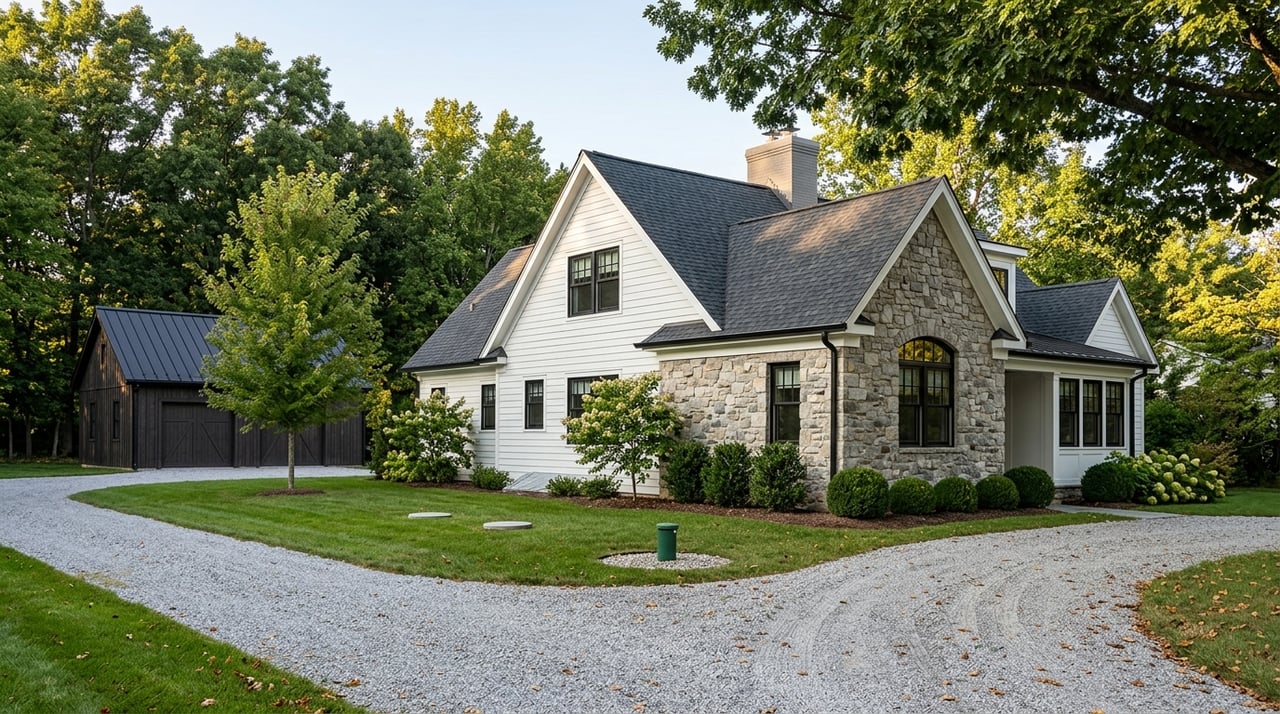
Dreaming about a few open acres near Waterford or Lovettsville? The setting can be hard to beat, but rural property often comes with more moving parts than a home in a typical subdivision. If you want more privacy, flexibility, and space, it helps to understand how wells, septic systems, permits, and site conditions can affect your plans before you buy. Let’s dive in.
Buying acreage near Waterford and Lovettsville is not just about lot size. In this part of Western Loudoun, the land is shaped by rural planning, historic resources, and site-specific rules that can directly affect what you can build or change.
According to Loudoun County’s historic district information, Waterford is a county-designated historic district, and the village and surrounding rural area are also recognized as a National Historic Landmark. That matters because most exterior changes in the district require Historic District Review Committee approval before work begins.
The county’s rural planning documents also describe this area as a landscape of scenic rivers, historic resources, and rural roads. In practical terms, that can mean more review layers and more sensitivity to site changes than you might expect in a suburban neighborhood.
One of the first things to confirm is exactly where the parcel sits. A property inside Waterford’s historic district may follow a very different path than a parcel just outside Lovettsville town limits.
Loudoun County notes in its comprehensive plan and zoning materials that the county zoning ordinance does not apply inside incorporated towns because each town has its own zoning code. For acreage outside town limits, county rules usually govern the parcel.
That distinction matters when you start thinking about a driveway, barn, fence, pool, or future addition. A listing may say “near Lovettsville,” but your permitting path could still be fully county-based.
For many acreage properties in this area, private utilities are one of the biggest practical differences from subdivision living. Loudoun County states that wells and springs are the primary drinking water source for many residents in western towns and rural areas, which makes utility due diligence a core part of your purchase decision.
The county requires a Health Department permit for wells and septic work before drilling a new well, modifying an existing well for certain construction projects, or installing or modifying a septic system. After a well is drilled, the water must be tested and the results forwarded to the Health Department.
That does not mean every rural property is a problem. It does mean you should treat the well and septic system as a major part of the property, not as a box to check at the end.
Before you get too far into a purchase, try to confirm:
Loudoun offers searchable well and septic records, which can help you verify what is already documented for the parcel.
If a property uses an alternative onsite septic system, budget planning becomes even more important. Loudoun County says these systems can cost two to four times as much as a conventional onsite system and recommends a maintenance agreement with twice-yearly checks and annual inspections by July 1, as described on the county’s septic systems page.
For you as a buyer, that means recurring maintenance costs should be part of the ownership picture from day one. A large lot does not always mean simple utility service.
On acreage, access is often one of the most overlooked parts of due diligence. Long driveways, shared access points, steep grades, drainage concerns, and easements can all affect your timeline and your budget.
Loudoun County’s permitting guidance advises property owners and buyers to review HOA or POA rules, stormwater easements, and conservation easements before starting a project. The county also specifically recommends reviewing easement terms with a land use and zoning attorney.
That advice is especially relevant if you are buying with plans to add a barn, outbuilding, pool, or guest-related structure where permitted. The property may look open and flexible, but mapped restrictions can change what is feasible.
For Waterford-area properties, driveway planning may require extra sensitivity. The county’s Waterford rural area guidelines say new roads and driveways should follow the land’s natural topography and remain as unobtrusive as possible.
In simple terms, that means location, slope, drainage, and visual impact can matter more here than they would on a suburban homesite. If your dream property needs a new or improved driveway, it is smart to ask detailed questions early.
Before you assume a lot can support your plans, take time to understand the paper trail behind it. Easements, setbacks, and site constraints can limit where you place structures or disturb the ground.
When a zoning permit is required, Loudoun may ask for a scaled site exhibit showing road access, adjoining properties, easements, wells, septic systems, and other major site features. The county also offers a locational-clearance review mapping tool, but it clearly notes that the map is not a survey.
That is an important distinction. The mapper is helpful for early planning, but some properties may still need survey or engineering support before you can rely on a site plan.
Acreage buyers often picture a shed, barn, fence, or pool as a straightforward future project. In reality, even smaller upgrades can trigger permits, fees, or additional review.
Loudoun classifies sheds as accessory structures and agricultural structures as barns and run-in sheds. Based on the county’s shed and agricultural structure guidance, sheds under 256 square feet can use a zoning-only application, while larger sheds need both a building permit and a zoning permit.
The county also requires a plat showing structure location and setbacks. If disturbed area exceeds 5,000 square feet, or the site falls within certain overlay areas, a grading permit for erosion and sedimentation control may also be required.
Fences are generally exempt from zoning permits in Loudoun, but that exemption does not apply in several overlay areas, including historic overlay areas. In Waterford, exterior changes should also be checked against historic-district review requirements, so fence plans deserve a closer look before work begins.
Pools can be another surprise for buyers coming from suburban neighborhoods. Loudoun’s pool permit page says private pools require a building permit and zoning permit, plus a plat showing setbacks and a pool fence acknowledgement form.
The county also notes that health clearance may be needed for additions, detached structures, and private pools when a lot is served by well and septic. So if a future pool is part of your wish list, ask early how the site and utility setup could affect that plan.
If you are comparing properties near Waterford and Lovettsville, this short checklist can help you stay focused:
The biggest mindset shift with acreage living is this: more land can offer more freedom, but it also creates more responsibility. Your experience will depend not just on the beauty of the setting, but on how well the land, utilities, and regulations fit your goals.
If you are buying from out of area or considering a second home, this matters even more. Routine follow-up, system maintenance, and local vendor coordination are much easier when you go in with a clear plan.
Acreage near Waterford and Lovettsville can be a wonderful fit if you understand the basics before you commit. If you want practical guidance on evaluating rural property in Western Loudoun, Leslie Carpenter can help you look past the listing photos and focus on the details that shape day-to-day ownership.
Address
44927 George Washington Blvd. #265 Ashburn, VA 20147