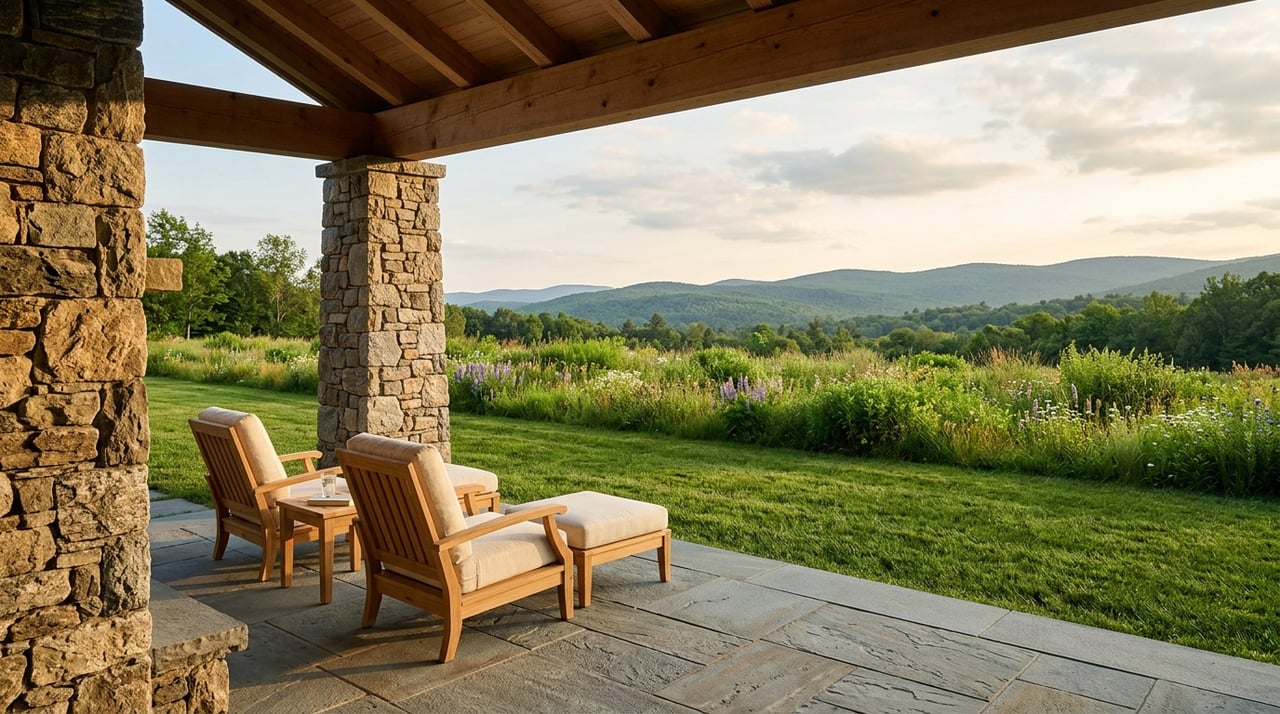
If you picture waking up to Blue Ridge views, open sky, and a little more breathing room, Round Hill and Bluemont probably already feel like a fit. But buying a mountain-view home here is not just about finding a pretty backdrop. You also need to understand land usability, local rules, commute patterns, and how scenery affects long-term value. Let’s dive in.
Round Hill and Bluemont sit in western Loudoun County, where the landscape rises toward the Blue Ridge. Loudoun County notes that elevations range from about 180 feet in the east to roughly 1,900 feet along the Blue Ridge crest. That changing terrain is a big reason homes here can feel very different from properties farther east in the county.
Round Hill is an incorporated town about 51 miles west of Washington, D.C., with access from Route 7. Town materials describe it as a historic community surrounded by farmland and newer neighborhoods, with a focus on protecting natural resources, historic character, and a rural atmosphere. For many buyers, that means Round Hill offers a small-town base with easier access to everyday routes and services.
Bluemont has a more distinctly rural and scenic identity. Loudoun County identifies it as a Rural Historic Village in the Blue Ridge foothills, and local tourism materials highlight hiking trails, wineries, breweries, and historic homes. If you want a setting that feels more like a mountain village with strong countryside character, Bluemont often stands out.
Both markets offer more variety than many buyers expect. You can find smaller in-town homes, larger houses on several acres, and sizable estate parcels, sometimes all within the same search. That is why buying a mountain-view home in Round Hill or Bluemont usually starts with lifestyle priorities, not just bedroom count.
As of early July 2026, Realtor.com shows a median listing home price of about $1.1 million in Round Hill and about $640,000 in Bluemont. Current listings also show a broad range of lot sizes and home types, from homes on about a quarter acre to properties with 20-plus acres and beyond. In simple terms, both areas can support a village-home search or an acreage-and-view search, though Bluemont tends to lean more rural.
In Round Hill, you may see:
In Bluemont, you may see:
That mix matters because price often tracks with more than square footage. In this part of Loudoun, the quality of the view, the amount of usable land, and the ease of maintaining the site can all influence value.
A beautiful view can add real appeal, but not every view carries the same value. Research cited in the report shows that scenic views are related to lot values, while the specific features buyers pay for can vary. A broad Blue Ridge vista, a valley view, a tree-buffered homesite, or an open horizon can each appeal to different buyers.
That means you should look beyond listing photos. Two homes with similar acreage may feel very different once you consider privacy, tree cover, slope, orientation, and how much of the parcel is actually usable. In this market, land quality can matter just as much as house size.
When you tour a property, it helps to ask:
These questions can help you compare properties more clearly, especially when list prices vary widely.
In western Loudoun, acreage does not always equal easy use. Loudoun County says steep slopes and mountainsides are sensitive to disturbance and can create risks such as erosion, road or building failure, flooding, and landslides. The county manages this through its Mountainside Development Overlay District, which includes land-use restrictions and performance standards.
For you as a buyer, that means a scenic parcel may come with limits that affect building plans, grading, clearing, or future additions. A property that looks expansive on paper may have only part of the land that is practical for outdoor living, equestrian use, outbuildings, or expansion. This is one of the biggest reasons mountain-view home shopping needs a more detailed lens than a typical suburban purchase.
Before you fall in love with the view, try to confirm:
A home with fewer acres but easier usability may be a better fit than a larger parcel with more restrictions or ongoing work.
Some of the most appealing properties in this area also come with additional layers of oversight or preservation. Loudoun County says more than 85,000 acres are protected by conservation easements. Those easements can help preserve open land and scenic character, but they can also limit what can be changed over time.
The county also offers land-use assessment for qualifying agricultural, horticultural, forestry, or open-space land, which can defer some real estate taxes. Agricultural and horticultural parcels generally must be at least 5 acres, and forestry usually requires at least 20 acres. If you are considering acreage, it is worth understanding whether the property is already in a land-use program and what that means for your plans.
Bluemont buyers should pay special attention to historic-district rules. Loudoun County states that properties within the Bluemont Historic District can require review by the Historic District Review Committee before certain exterior changes. That can affect projects like additions, fences, windows, and new construction.
As you narrow your search, ask whether the property is:
None of these factors automatically make a property less desirable. They simply shape how you should evaluate flexibility, costs, and long-term plans.
The appeal of this area goes well beyond the house itself. Bluemont is closely tied to outdoor recreation and rural experiences, with nearby wineries, breweries, trails, and annual events. Sweet Run State Park adds another layer of appeal with expansive Blue Ridge views, 11 miles of hiking trails, 9 miles of equestrian trails, and access to the Appalachian Trail.
Round Hill offers a different kind of balance. You still get western Loudoun scenery and access to outdoor living, but with a more town-centered feel and direct Route 7 connection. For some buyers, that makes Round Hill a practical middle ground between countryside space and daily convenience.
Your ideal choice depends on how you want to live. If your weekends revolve around hiking, rural roads, and a more tucked-away setting, Bluemont may feel worth the trade-offs. If you want mountain views with somewhat easier day-to-day access, Round Hill may feel more comfortable.
Commute planning should be part of the home search from the beginning. Loudoun County Transit operates commuter bus service from park-and-ride lots to Rosslyn, Crystal City, the Pentagon, and Washington, D.C. The county also offers fare-free local bus service from Purcellville through Leesburg to the Silver Line.
Round Hill’s position near Route 7 can be a practical advantage for some buyers. Bluemont’s more rural setting may mean a longer drive before you even connect to your main route or transit option. If you work in or near the D.C. metro area, the daily travel pattern can shape your experience as much as the home itself.
Before making an offer, think through:
A property can be a great match on paper but still feel less workable if the travel rhythm does not fit your life.
If you are torn between the two, this quick comparison can help frame the choice.
| Factor | Round Hill | Bluemont |
|---|---|---|
| Overall feel | Small town with nearby countryside | Rural historic village in the foothills |
| Access | Off Route 7 | More rural road network |
| Common search styles | In-town homes, acreage homes, townhomes | Village homes, rural acreage, estate parcels |
| Scenic identity | Town-and-country balance | Strong mountain and rural character |
| Special review issues | Site-specific land factors | Historic district review may apply |
Neither option is universally better. The right fit depends on whether you prioritize easier access, historic village character, acreage, remodeling flexibility, or a more immersive mountain setting.
Buying a mountain-view home in Round Hill or Bluemont usually works best when you start with your real lifestyle, not just your wish list. The most successful buyers get clear on how they want to use the land, how much upkeep they want, what kind of view matters most, and how the commute fits into daily life. Once those pieces are in focus, the right property often becomes much easier to spot.
If you are exploring Round Hill or Bluemont and want thoughtful local guidance on acreage, historic properties, or lifestyle-driven home choices, Listed by Leslie Group can help you search with clarity and confidence.
Address
44927 George Washington Blvd. #265 Ashburn, VA 20147